


When to Rake a Lawn


Raking is an important practice for any gardener trying to maintain a healthy and vibrant lawn. However, like scarifying, this should only be carried out at specific times of year to get the best results and avoid wasting your time.
In this article, we will explain the process of raking a lawn properly, and when exactly this should be done. We will also take you through the different types of rake, to give you a better understanding of how each should be used and which is right for your lawn.
The Best Time to Rake Your Lawn

For the best possible results, you should rake your lawn at specific times of the year. In the table below we detail when those times are and the corresponding treatment you should carry out.
| Season | Appropriate Treatment |
| Spring | Rake away any loose debris, including leaves and stones. If thatching has formed, clear that away. |
| Summer | Avoid raking too much in the summer. If you need to, do so gently. This should only be carried out for debris and leaves, not thatching or moss overgrowth. |
| Autumn | This is the optimal time for raking your lawn. There will be an accumulation of fallen leaves that, if left unchecked, can rot. This risks killing your grass. |
| Winter | You should never undertake heavy raking during the months of November through to February, as this is a dormant time for most plant life, and if stems are broken they will not repair, leaving your lawn looking brown and patchy. |
Why Do Lawns Need To Be Raked?
Raking can be carried out for a number of reasons, but most commonly people rake their gardens to rid grass of unwanted growths, fallen leaves, and other kinds of debris. There are also specific kinds of rakes that are designed for removing debris in soil that is being prepared for ploughing.
If you do not rake your garden semi-regularly, or fail to spot the warning signs that it needs doing, such as a spongy texture underfoot, then your lawn could suffer. Raking helps to support the intake of vital nutrients into the roots of your lawn and allows for more efficient water drainage.
Raking VS Scarifying
Two terms that are often confused or used interchangeably, but stand alone as separate and particular forms of lawn treatment.
- Raking is less invasive and involves the use of wire tines to remove moss, leaves, and loose debris from grass.
- Scarifying is more invasive and involves the use of steel blades that dig deep into the root beds of the lawn to dig up thatch and other embedded debris.
About Lawn Moss
Above we mentioned moss and thatch in relation to raking and scarifying lawns.
There are many species of moss, the most common and recognisable being vibrant in colour and fast to spread in dense clumps. What is interesting about moss is that it has no roots, and instead uses ‘rhizoids’ to anchor to their place of growth. But the inherent looseness of their growth means they can be pulled up and removed easily. This can be done with a rake or scarifier, but raking is much simpler and less destructive.
Moss is one of the most common signs that your lawn needs to be raked. Look out for uneven colouring across your lawn, as well as an uneven and spongy surface texture under your feet.
About Lawn Thatch
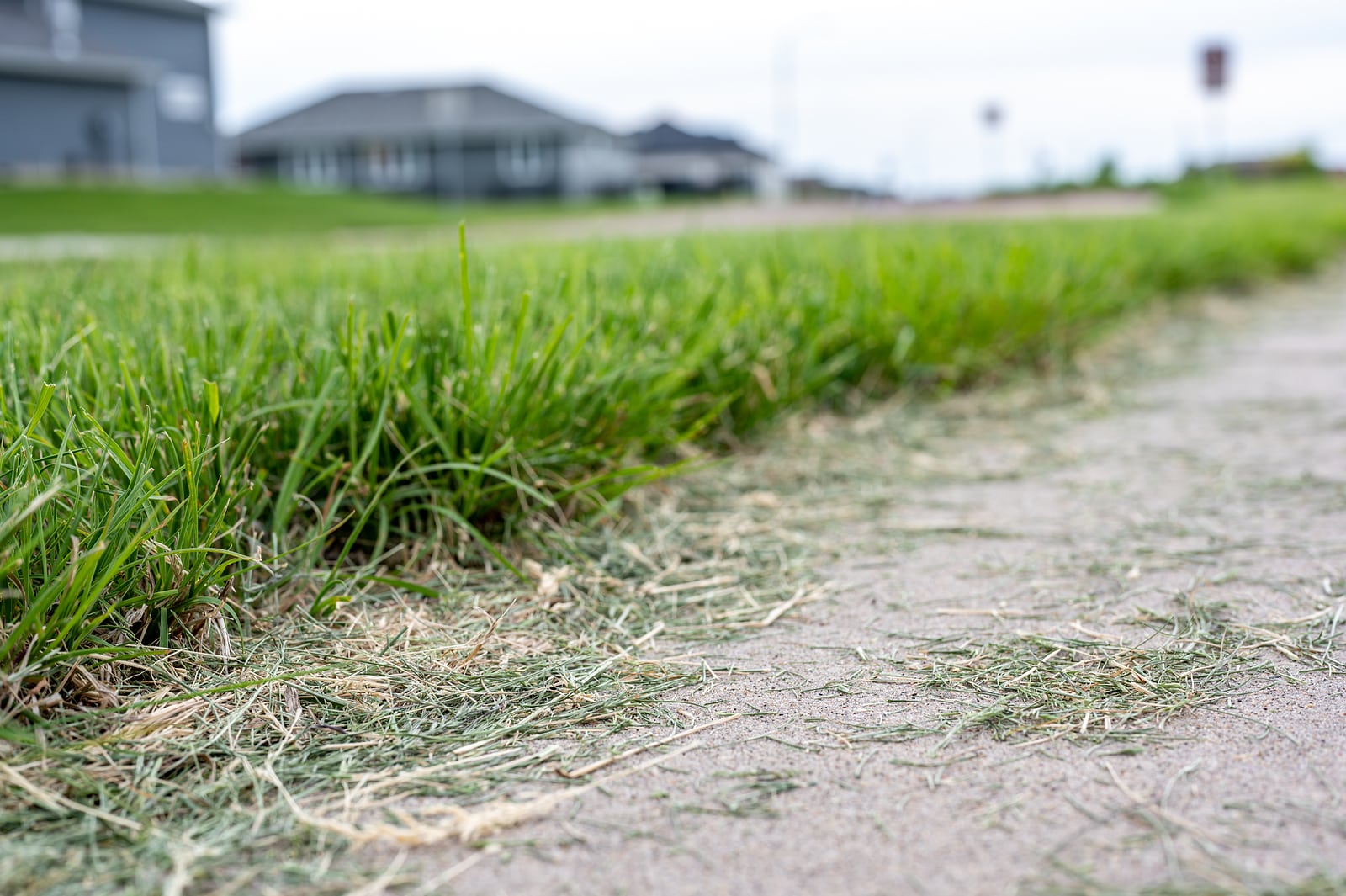
Thatching is slightly more difficult to remove and generally cannot be raked. It is made up of interwoven organic matter such as stems, roots, and dead shoots. Thatching often forms between the grass shoots and topsoil, and if it becomes thick enough can actually block vital nutrients and water from penetrating down to the live roots.
Scarifying is the best method for removing thatching from your lawn, and involves digging it straight up, which can result in patchy grass while the area heals. Before scarifying your garden, make sure you are doing so at the right time.
To help you with this overall process, we have a complete guide on how to scarify your lawns effectively by hand or machine.
How to Choose the Right Type of Rake

With so many rakes available, all with similar looking prongs, it can be hard to know which is right for the job.
- Plastic Leaf Rake: With its widespread plastic tines, this rake is perfectly designed for raking up fallen leaves and clearing light debris from your lawn.
- Moss Removal Rake: This rake head from Wolf Garten is made to swing when used, which allows the sharp, angled teeth to pull up moss and thatch with ease. Pair with a handle of your choice.
- Longspan Rake: Its metal tines are sturdy and able to pull up any loose matter without ‘biting’ into the lawn and damaging the topsoil. Its wide head allows for more coverage. Use with a handle of your choosing.
-
We also stock a number of other rakes that are specifically designed for use in ploughing and cultivating your soil. Models such as the aptly named Soil Rake are best suited for removing rocks and weeks from topsoil, as well as creating a smooth and even surface for planting.
No matter the kind of raking you are looking to undertake, we can provide you with the perfect tools for the job. Feel free to browse the rest of our extensive range today.


