


When Can You Cut Hedges


All greenery needs cutting every now and then, and the same goes for your hedges. There are a number of reasons why semi-regular trimming is vital to the health of your hedge and your garden, but when should you do it?
As with hedges, one size will not fit all gardens, and so one time of year will not suit all growths. This is why we are here to explain the ins and outs of trimming times, the top considerations for specific species, and some helpful maintenance tips to keep your hedges looking their best.
Why Is It Important to Cut Your Hedges?
When left to their own devices, garden hedges can exceed the bounds of their plot and take over the surrounding area, potentially suffocating neighbouring plants and altogether spoiling the aesthetic of your garden.
Without the minimum amount of care, hedges can not only outgrow their confines but also become more susceptible to unhealthy growth and disease, which can spread to other plant life through underground root networks. Trimming will help to keep growth new, clear out any spoiled leaves or troublesome pests, and maintain the vitality of your garden in the long run.
Can Cutting Your Hedges Stimulate Growth?
All newly planted hedges will need to be ‘formatively pruned’ in the spring and winter of its first two years. This form of intentional cutting encourages the sapling to sprout new branches and leaves, and deepens the hold of its roots.
Once a hedge is ‘established’, or in other words fully grown, semi-regular pruning will need to take place in order to keep it in line and promote the turnover of healthy growth. This strategic removal of excess branches and leaves makes way for flowers to bloom and fruits to bud.

How Can I Cut My Own Hedges?
General maintenance trimming differs from formative pruning in the way that instead of promoting growth you’ll be attempting to inhibit it.
Pruning is usually undertaken with pruning shears, which are used to cut stems below the leaf nodes to make way for new growth.
Maintenance trimming can involve the use of shears, for up-close detailing and loose ends, but more commonly hedge trimmers, which are high-powered tools designed for wider coverage and heavy-duty cutting.
When Is the Best Time to Cut Your Hedges?
Timing will depend on a few factors, including the species of your hedge and whether it is deemed formal or informal.
- A formal hedge: is anything cut to a shape that is seemingly unnatural, such as topiaries – and should be cut twice a year.
- An informal hedge: is kept as close to its natural state as possible and should be cut once a year. Lavender and hawthorn are strong examples of informal hedges.
As with anything, there are exceptions to these ‘rules’, and some species may require up to three cuts a year. This is especially true for certain formal hedges with complex formations.
But as a general rule that can be applied to most species, cutting should take place between spring and summer. This is because deciduous hedges thrive during these warmer months, and are more easily able to heal from heavy trims and regrow, ready for the dormant winter. Understandably this rule does not apply to evergreens.
The Trimming Times for Popular Hedge Species
To help you evaluate when your hedges need cutting, we have compiled a list of the most common hedge types found in gardens across the UK, Scotland, and Northern Ireland.
- Berberis: Trim once a year, after flowering in the summer. Growth can be left for a year to allow for berry growth and a bushy, informal aesthetic.
- Buxus (Box): Trim at least twice a year, in June and then between August and September. Choose cloudier days to cut, but if this is not possible, be sure to spritz the hedge to prevent unwanted branching.
- Escallonia: Trim up to twice a year, in May and August. The hedge will flower in June, so you can decide if you want a more formal or informal look and cut accordingly.
- Hawthorn: Trim up to twice a year, after it has flowered in June. If you appreciate an informal look, you can avoid cutting for a year and let the birds eat the berries.
- Holly: Trim once a year, in the late summer. Holly can sometimes grow vigorously, so a springtime cutback may be necessary.
- Laurel: Trim once a year, in July or August. Avoid using hedge trimmers here, as the leaves are big and hardy, so the blades will tear and damage them. Instead, use secateurs to carefully cut back and reshape.
- Leyland Cypress: Trim up to three times a year, in April, July, and August. This hedge grows very quickly, so tend to it regularly, being careful not to too far passed its green growth, as it will struggle to recover.
- Privet: Trim twice a year, between May and August. Privet responds well to trimming, and eventually becomes tightly packed and easier to tend to.
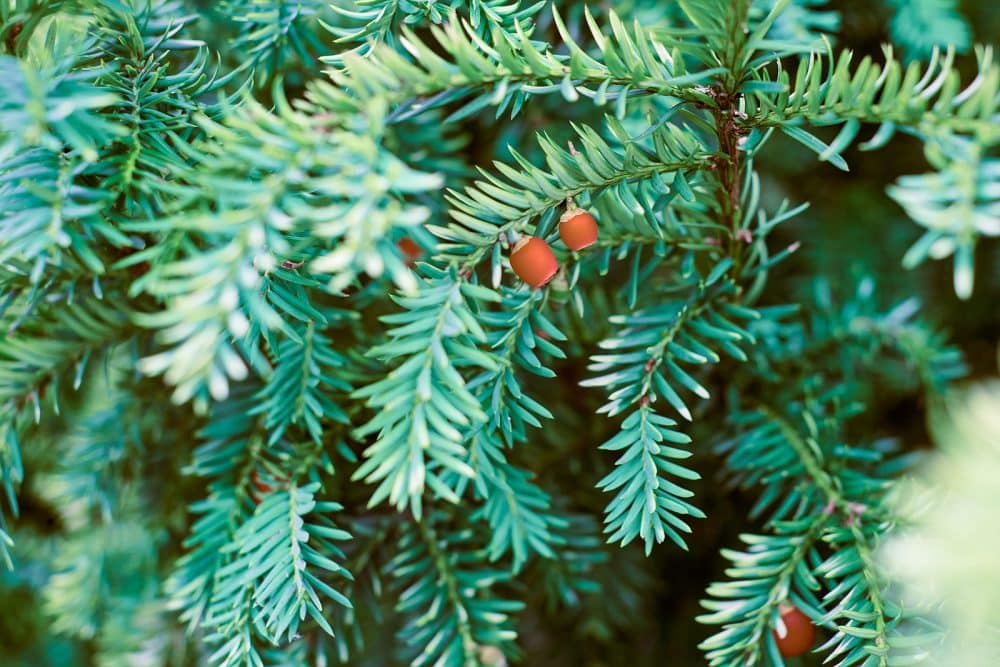
- Yew: Trim once a year, in August and September. Can be pruned earlier in April if growth is out of hand.
An Important Consideration
Before you start trimming your hedge, you must check for any signs of wildlife or nesting birds. If you cut a hedge knowing full well that birds have made a home there, you are breaking the law (See Section 1 of the Wildlife and Countryside Act of 1981).
Trimming is incredibly invasive and can injure animals living within. Birds will often abandon their eggs if they are disturbed in this way. Nesting season falls between March and late August, so the best thing to do if you find nests is simply to wait. You do not need to interfere with or move the nest yourself. The birds and their nestlings will move on once the season has come to a close, and from then you will be able to resume trimming as normal.
Choose the Right Hedge-Cutting Tools for the Job
We offer an extensive selection of hedge-trimming and maintenance tools, fit for any hedge and any garden. Whether you need hedge trimmers for heavy-duty care or handheld shears for small-scale detailing, you have come to the right place.


Amazing post, Thanks for sharing